The EEOC Changed Its Guidance on Criminal Background Checks. But Does That Mean Employers Should Change Their Approach? Just because the rules change doesn’t mean your values have to.
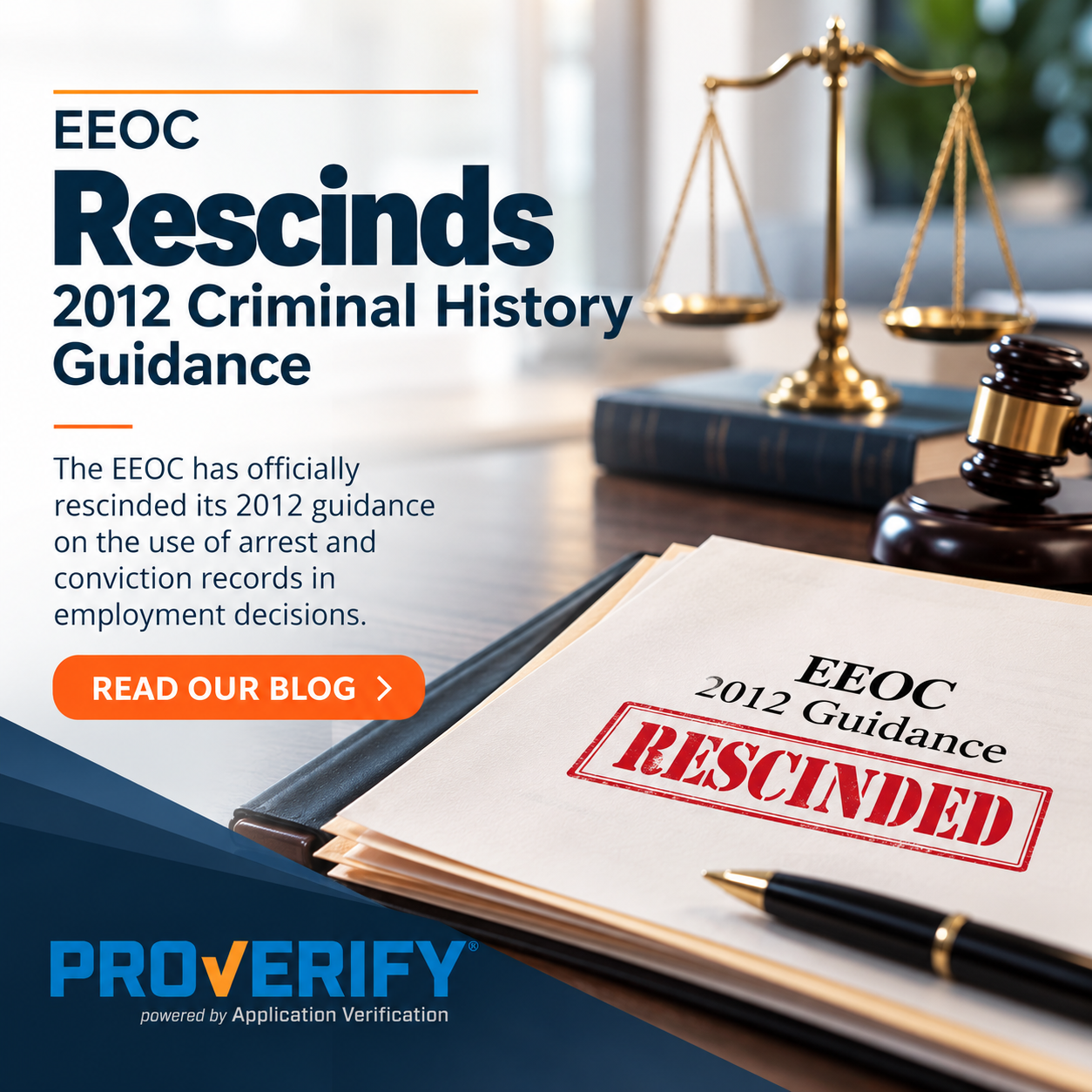
On October 29, 2026, the Equal Employment Opportunity Commission (EEOC) announced that it had officially rescinded its 2012 Enforcement Guidance on the Consideration of Arrest and Conviction Records in Employment Decisions.
The decision, effective immediately, marks a significant change in the agency’s approach to criminal history and employment screening.
But what does this actually mean for employers? And more importantly, does it mean businesses should change how they evaluate candidates with criminal records?
Our take? Just because you can change your process doesn’t mean you should.
So, What Actually Changed?
For more than 14 years, the EEOC’s 2012 guidance encouraged employers to take a thoughtful, individualized approach when evaluating criminal history.
Rather than automatically disqualifying candidates, employers were encouraged to consider three key factors:
- The nature and seriousness of the offense. What happened, and how significant was it?
- The amount of time that has passed. Did this happen six months ago or 16 years ago?
- The nature of the position. Does the offense have any meaningful relationship to the job?
The guidance also encouraged individualized assessments, allowing candidates an opportunity to explain their circumstances before a final employment decision was made.
With the rescission, these recommendations are no longer part of the EEOC’s active 2012 enforcement guidance.
But here’s an important distinction:
The EEOC rescinded its guidance. It did not repeal Title VII or eliminate employers’ obligations under other applicable laws.
Federal anti-discrimination protections remain in place. The Fair Credit Reporting Act (FCRA), applicable state and local laws, and industry-specific screening requirements still matter.
And perhaps the most interesting part of the EEOC’s announcement? The agency specifically stated that employers are not required to abandon lawful practices they adopted under the previous guidance.
In other words, you don’t have to throw out a perfectly good process just because the agency changed its position.
Just Because You Can Doesn’t Mean You Should
This is where I think the conversation becomes more important than the regulation itself.
Background checks are essential. They help employers protect their businesses, employees, customers, and communities.
But let’s remember something.
A background check tells you about someone’s history. It doesn’t necessarily tell you who that person is today.
A conviction from 15 years ago doesn’t automatically define someone’s character today.
An arrest doesn’t necessarily mean someone committed a crime.
And a poor decision made at 19 shouldn’t automatically eliminate someone’s opportunities at 40.
Does that mean employers should ignore criminal history? Of course not.
There are absolutely circumstances where criminal conduct presents a legitimate concern, particularly when it relates directly to the responsibilities of a position. Certain offenses may even legally disqualify individuals from specific jobs.
Employers have every right, and sometimes a legal obligation, to protect their organizations.
But there’s a big difference between identifying a legitimate risk and automatically rejecting someone without understanding the circumstances.
A background check should help you make a decision. It shouldn’t always make the decision for you.
You Can Still Have the Conversation
Even though the EEOC has rescinded its previous guidance, there’s nothing preventing employers from continuing to take a fair, consistent, and thoughtful approach to criminal history.
Before making a decision, consider asking:
- Is the offense actually relevant to the position?
- How much time has passed?
- Is there evidence that the individual has taken steps to move forward?
- Are there circumstances that deserve clarification?
- Would we make the same decision if another candidate had a similar record?
And here’s one more idea.
Talk to the candidate.
Not every situation requires a lengthy investigation or a formal meeting. But when appropriate, give someone an opportunity to provide context, clarify information, or explain what has changed since the offense occurred.
Listen.
You may still decide that the individual isn’t the right fit for the position. And that’s okay.
The goal isn’t to hire everyone with a criminal record. The goal is to make informed, consistent, and defensible decisions.
Sometimes, a five-minute conversation can provide context that a five-page background report cannot.
Fair Hiring Isn’t Just the Right Thing to Do. It’s Smart Business.
Finding good employees isn’t easy.
Businesses spend considerable time, money, and resources recruiting qualified candidates. Automatically eliminating someone based on criminal history without considering relevance or circumstances could mean overlooking an excellent employee.
People grow. People change. People learn from mistakes.
And sometimes, the person who was given a second chance becomes one of your most loyal, hardworking employees.
Of course, that won’t be true in every situation. That’s exactly why thoughtful evaluation matters.
A good screening process doesn’t mean lowering your standards or ignoring risk.
It means understanding the information, applying your standards consistently, documenting decisions, and considering the actual responsibilities of the job.
And remember, depending on the circumstances, certain review procedures may still be legally required under the FCRA or applicable state and local laws.
Compliance should be the foundation of your hiring process, not necessarily the ceiling.
You Don’t Have to Be a Lawyer to Be Human
Regulations change. Agency priorities shift. Enforcement guidance comes and goes.
And I’ll be the first to admit it.
I’m NOT a lawyer. I don’t even play one on TV. But I am human.
And I believe there’s room for a little humanity in the hiring process.
Fairness, consistency, and common sense shouldn’t depend entirely on whether a federal agency recommends them.
At ProVerify, we believe background screening should help employers make better decisions, not simply provide reasons to say no.
The EEOC’s decision may change how some employers approach criminal history reviews. But it doesn’t mean businesses need to abandon processes that encourage fair consideration and informed decision-making.
You can still look at the circumstances.
You can still consider how much time has passed.
You can still determine whether the offense is relevant to the position.
And you can still give someone the opportunity to tell their story.
Because doing what’s legally required and doing what’s right don’t have to be two different things.
The rules may have changed. Your process doesn’t necessarily have to.
And your humanity certainly shouldn’t.
You don’t have to be a lawyer to be human.
Sometimes, you just have to be willing to have the conversation.
We will always provide you the tools to be FCRA compliant – but you have to ultimately make the decision.
-Jen Kerrigan, Director of Client Success – ProVerify
ProVerify provides comprehensive background screening solutions to help employers make informed hiring decisions. This article is intended for general informational purposes and does not constitute legal advice. Employers should consult qualified legal counsel regarding their specific screening policies and applicable laws.




 Contact Us